07/10/2026
New Study Provides the First Evidence of the Environmental Impact of Gum Disease Prevention
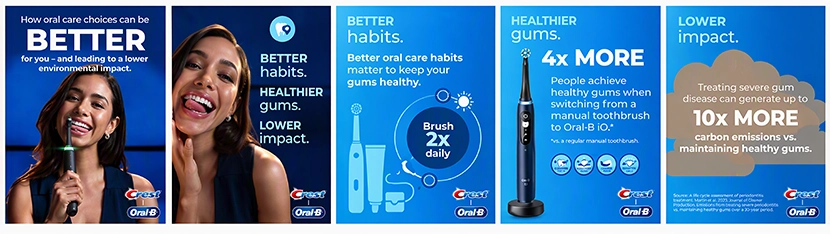
Treating advanced periodontitis, an advanced form of gum disease, causes up to ten times more environmental impact than consistent daily oral care at home. This is the finding of a Life Cycle Assessment (LCA) published in the Journal of Dentistry in 2026 - the first study of its kind. For the first time, it quantifies the environmental costs of gum disease across the entire periodontal (advanced gum disease) care pathway .
"This life cycle assessment is groundbreaking because it places oral care products and daily routines into the real-world context of healthcare delivery. Preventing disease at home and avoiding complex clinical treatment is the most effective path toward greater environmental sustainability in dentistry." Brett Duane, Co-author; Honorary Professor at the University of Dundee and Associate Professor at Trinity College Dublin
Key findings of the study
- The greatest environmental benefit comes from prevention of advanced gum diseases, not from the type of toothbrush used.
- Clinical interventions account for approximately 90% of the total environmental impact across the periodontal care pathway.
- Treating advanced periodontitis has up to ten times the environmental impact of preventive oral care at home (Duane et al., Journal of Dentistry, 2026).
- Water consumption is the largest environmental factor associated with home oral care - not the oral care products themselves.
- There is no significant environmental difference between manual and electric toothbrushes.
What this means for your daily routine
- Brush your teeth twice a day for two minutes using fluoride toothpaste.
- Clean between your teeth daily with dental floss or interdental brushes.
- Seek dental treatment early for gum inflammation before it progresses to periodontitis.
- Visit your dentist regularly, including for professional dental cleanings.
"As periodontitis progresses, treatment becomes significantly more intensive. Effective prevention reduces the need for lifelong treatment—a benefit for patients, healthcare systems, and the environment alike."
Prof. Nicolas Martin, Co-author; University of Sheffield; Chair of the FDI Working Group on Sustainability in Dentistry
Healthy gums are about more than just oral hygiene. There is substantial scientific evidence linking periodontitis with systemic diseases such as diabetes and cardiovascular disease. Preventing gum inflammation at an early stage not only protects your teeth and gums—it also supports your overall health.
For P&G and Oral-B, this is more than just a research finding. It reinforces why effective preventive products are at the heart of our research: because the greatest opportunity - for both health and the environment - lies in preventing disease before it occurs.
Frequently Asked Questions
What is the difference between gingivitis and periodontitis?
Gingivitis is inflammation of the gums that does not involve the underlying bone and is completely reversible. Periodontitis is the progression of inflammation to the tooth-supporting tissues, including the bone. Once tissue damage has occurred, it cannot be fully reversed. Because the transition between the two conditions is gradual, early detection is essential.
Why does treating periodontitis have a greater environmental impact than preventing it?
Clinical treatment requires resources that are not needed for home oral care, including sterile single-use instruments, medical equipment, anesthesia, energy for sterilization and operating dental practices, as well as patient travel. The more advanced the disease, the more intensive the treatment. According to the LCA study, these clinical interventions account for around 90% of the total environmental impact across the periodontal care pathway (Duane et al., Journal of Dentistry, 2026).
Is an electric toothbrush more sustainable than a manual toothbrush?
The LCA study found no significant difference in overall environmental impact between manual and electric toothbrushing routines. What matters most is not the toothbrush itself, but whether consistent home oral care prevents disease and thereby avoids resource-intensive clinical treatment.
How common is periodontitis in Germany?
According to the German Oral Health Study (DMS V), around 52% of German adults have moderate to severe periodontitis. Globally, more than one billion people were living with severe periodontitis in 2021 (Global Burden of Disease, 2021).
How are gum disease and systemic diseases connected?
Scientific studies have identified associations between chronic periodontitis and an increased risk of cardiovascular disease as well as diabetes. Systemic inflammatory responses are believed to be a possible underlying mechanism, although the precise causal relationships continue to be investigated.
Who conducted and funded the study?
The study was conducted by researchers from the University of Sheffield and Trinity College Dublin - Brett Duane, Nicolas Martin, Steven Mulligan, Joost Dewaele, and Lauren Wedel - in collaboration with P&G. The methodology complies with the ISO 14040/14044 standard, was independently verified, and the study was peer-reviewed and published in the Journal of Dentistry.
What is a Life Cycle Assessment (LCA) in dentistry?
A Life Cycle Assessment (LCA) is a standardized method for evaluating the environmental impacts of a product or process throughout its entire life cycle (ISO 14040/14044). This study is the first to apply a complete LCA to the periodontal care pathway—from healthy gums through to the clinical treatment of advanced periodontal disease.
Study Reference
Duane, B., Martin, N., Mulligan, S., Dewaele, J., & Wedel, L. (2026). Quantifying the Environmental Impact Potential from Periodontal Health to Disease: Findings from a Life Cycle Assessment Study. Journal of Dentistry (2026). DOI: https://www.sciencedirect.com/science/article/pii/S0300571226004057
For more in-depth information about P&G's sustainability strategy and research capabilities, please refer to https://us.pg.com/environmental-sustainability/
1 The study was done by researchers from the University of Sheffield and Trinity College Dublin in collaboration with P&G, and its methodology was independently verified in accordance with ISO 14040/14044.